

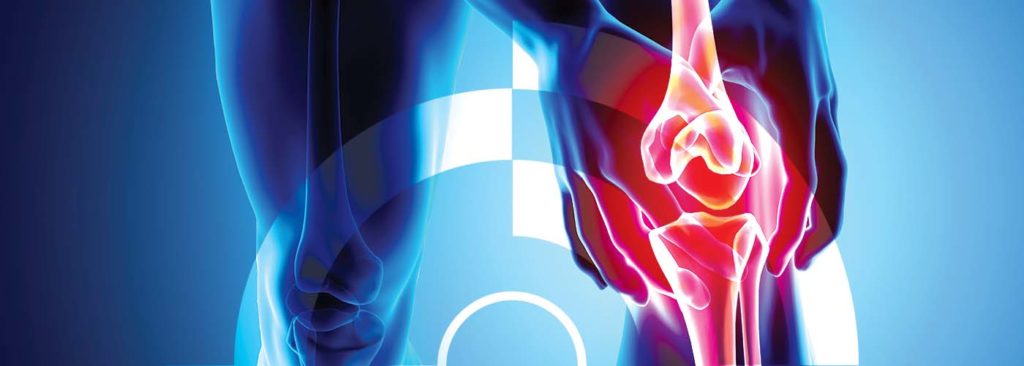
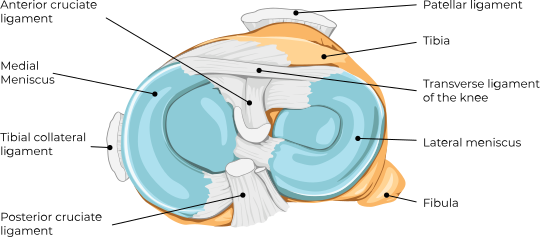
The meniscus is a wedge-shaped piece of fibrocartilage in your knee between the tibia (shinbone) and femur (thighbone). You have two menisci: the lateral meniscus on the outside of your knee and the medial meniscus on the inside. The menisci act as "shock absorbers" between your tibia and femur, helping to transmit weight from one bone to another. They also play an important role in knee stability.
What is a torn meniscus?
A torn meniscus is one of the most common knee injuries. The meniscus is a type of cartilage so people may refer to a meniscal injury as "torn cartilage". Athletes, particularly those who play contact sports, are at risk for meniscal tears. These usually follow a twisting knee injury. However, a meniscus injury can occur to anyone of all ages.
Meniscus Anatomy
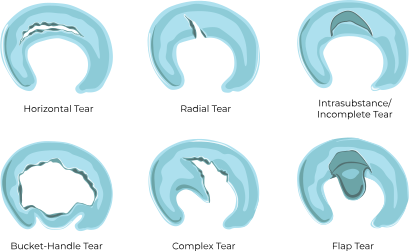
6 Types of Meniscus Tears

What are meniscus tear symptoms?
The mechanism of injury is usually a twisting of the knee. You might feel a "pop" or “crack” when you tear the meniscus. Most people can walk on their injured knee and many athletes may still be able to play on. Over the coming days, the knee will gradually become more stiff and swollen.
The most common symptom of a meniscal tear is knee pain. Other symptoms include:
- Stiffness and swelling
- Catching or locking
- Instability, or the knee "giving way" on you
- A locked knee, or inability to move the knee through its full range of motion
How do you make a diagnosis of a torn meniscus?
After taking a concise and directed medical history, your knee will be examined.
During the examination, I will look for:
- Swelling, warmth and redness
- Pain to touch or palpation
- Range of motion
- Crepitus (grinding) with movement
- Your gait (the way you walk)
- Assess ligaments of the knee
- Signs of previous injuries
The gold standard radiological imaging for a torn meniscus in Perth Western Australia diagnosis is an MRI scan.
Treatment options for torn meniscus
Non-operative Meniscus Tear Treatment Perth
A degenerative meniscal tear in an older patient with arthritis will generally not need surgery. Initial non-operative treatment includes:
- Rest. Take a break from the activity that caused the injury.
- Ice. Use cold packs for up to 20 minutes at a time, several times a day. Do not apply ice directly to the skin.
- Compression. To prevent further swelling, wear an elastic compression bandage.
- Elevation. To reduce swelling, recline when you rest, and put your leg up on a pillow.
- Simple painkillers, such as anti-inflammatory medications (NSAIDs) or Panadol, may reduce inflammation and pain.
- Cortisone injections into the knee can be helpful.
- Wearing a knee brace helps with pain relief and improves mobility.

Meniscus Tear Surgical Treatment Perth
In a younger patient with an acute tear, surgery is indicated. Older patients with mechanical pain, that have not responded to non-operative treatment may also benefit from meniscus tear surgery in Perth Western Australia.
Meniscus repair Perth WA: Some meniscus tears can be repaired by suturing the torn pieces back together. Whether a tear can be successfully repaired depends upon the type of tear, as well as the overall condition of the injured meniscus. Because the meniscus must heal back together, recovery time for a repair is longer than for a meniscectomy.
Partial meniscectomy Perth: In this procedure, the damaged meniscus tissue is trimmed away, leaving behind the uninjured meniscus. This procedure typically allows for immediate weight bearing, and full range of motion soon after surgery in Perth.
Continue to next page: Knee arthroscopy
Surgery For Shoulder, Hip and Knee
Hip Surgery
Personalised Hip ReplacementConditions For Shoulder, Hip and Knee
Hip Conditions
Hip ArthritisEnquiry
WA Orthopaedic Consulting Rooms
Perth
St John of God
Medical Clinic
Suite 213
25 McCourt Street,
Subiaco WA 6008
Albany
Great Southern
Specialist Centre,
55 Cockburn Rd ,
Mira Mar WA 6330
Phone: 08 9489 8733
Email: blakeney@wcortho.com.au
Fax: 08 9489 8735
Perth Orthopaedic Operating Theatres
St John of God Hospital
12 Salvado Rd, Subiaco WA 6008