


What is Knee Arthritis?
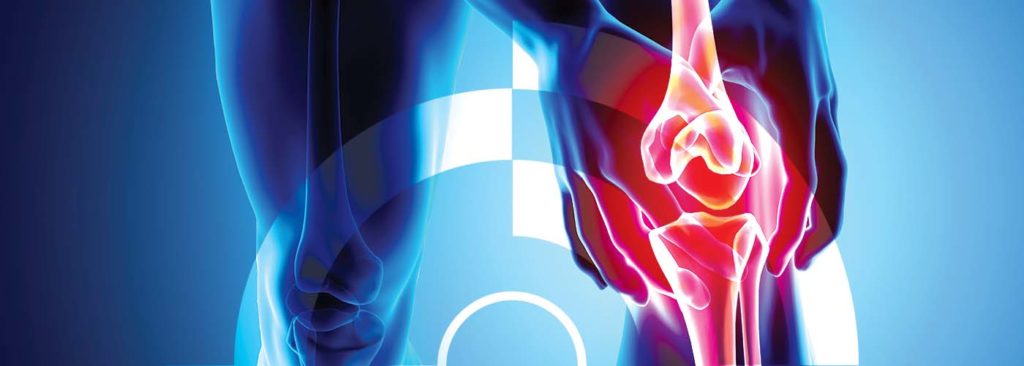
Arthritis is inflammation of one or more of your joints. In an arthritic knee, the inflammation leads to cartilage damage and loss which results in pain and stiffness.
There is no cure for arthritis of the knee, but there are a number of options available to manage your pain and keep you active.
The main types of arthritis that typically affect the knee are the following.

Osteoarthritis
Osteoarthritis is the most common type of arthritis, which increases in prevalence with age or “wear and tear”. It is a condition that destroys the articular cartilage (the smooth outer covering that protects the bone). When the cartilage wears away, the protective space between the bones decreases to the point where there is bone-on-bone contact. Movement then causes the rough bone ends in the joint to rub against each other, causing pain. With increasing severity, the knee joint will stiffen up and lose movement. Osteoarthritis usually affects people over 50 years of age.
Rheumatoid Arthritis
Rheumatoid arthritis is a chronic disease that can affect multiple joints throughout the body. It usually affects the same joint on both sides of the body, left and right. It is an autoimmune disease in which the body's immune system (which normally protects the body from infection) attacks healthy joints, tissues, and organs. Rheumatoid arthritis causes the joint lining (synovium) to swell and destruction of the articular cartilage, which causes pain and stiffness in the joint. It occurs most commonly in women of young to middle age (15-50 years), but can affect anyone. It mostly affects the joints of the hands and feet and tends to be symmetrical, but can also affect shoulders, hips and knees. It can lead to severe deformity in these joints.
Posttraumatic Arthritis
Posttraumatic arthritis is a form of osteoarthritis that develops after an injury to the knee, such as a fracture or ligament injury. It can occur months to years after the injury.

What are the Symptoms?
The most common symptom of arthritis of the knee is pain, which is aggravated by activity and progressively gets worse over time. Most patients complain of a deep ache in the joint. The pain may be affected by the weather. Pain is often felt at night even when not moving the knee and may affect your sleep. Pain and swelling may be worse in the morning, or when getting up after sitting or resting
The knee may become stiff and swollen, making it difficult to bend and straighten. Loose fragments of cartilage can get stuck in the knee causing it to "lock up" or give way.
You may hear a grinding, creaking or clicking sound (crepitus) as you move your knee.
How do you make a diagnosis of knee arthritis?
After taking a concise and directed medical history, your knee will be examined.
During the examination, I will look for:
- Swelling, warmth and redness
- Pain to touch or palpation
- Range of motion
- Crepitus (grinding) with movement
- Your gait (the way you walk)
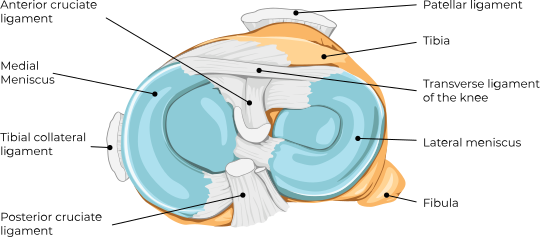
- Assess ligaments of the knee
- Signs of previous injuries
- Involvement of other joints (an indication of rheumatoid arthritis)
Radiological imaging such as X-Rays will confirm the diagnosis. CT and MRI scan scans may give further information.
Treatment options for knee arthritis
Non-operative Treatment
Initial treatment of arthritis is non-surgical. This may include the following:
- Rest or activity modification. Minimising activities that aggravate the pain, such as climbing stairs. Switching from high-impact activities (like jogging or tennis) to lower impact activities (like swimming, cycling or Pilates) will put less stress on your knee.
- Losing weight can reduce stress on the knee joint, resulting in less pain and increased function.
- Using a walking stick or a walker can improve mobility and independence.
- Physiotherapy may improve the strength and movement in your knee.
- Simple pain killers, such as anti-inflammatory medications (NSAIDs) or panadol, may reduce inflammation and pain.
- Cortisone injections in the knee can be helpful, but the effect is often temporary.
- If you have rheumatoid arthritis, you should see a rheumatologist who may prescribe disease-modifying drugs.
- There is minimal scientific evidence to support the use dietary supplements.

Surgical Treatment Perth
Once your arthritis has got to the point when non-operative modalities are not working, you may benefit from surgery.
Knee joint replacement (arthroplasty) is the mainstay of treatment for advanced arthritis of the knee. In a joint replacement, the damaged parts of the knee are removed and replaced with artificial components, called a prosthesis.
Replacement surgical options include:
Surgery For Shoulder, Hip and Knee
Hip Surgery
Personalised Hip ReplacementConditions For Shoulder, Hip and Knee
Hip Conditions
Hip ArthritisEnquiry
WA Orthopaedic Consulting Rooms
Perth
St John of God
Medical Clinic
Suite 213
25 McCourt Street,
Subiaco WA 6008
Albany
Great Southern
Specialist Centre,
55 Cockburn Rd ,
Mira Mar WA 6330
Phone: 08 9489 8733
Email: blakeney@wcortho.com.au
Fax: 08 9489 8735
Perth Orthopaedic Operating Theatres
St John of God Hospital
12 Salvado Rd, Subiaco WA 6008