



What is Bursitis?
Bursitis is shoulder impingement, one of the most common problems seen with the shoulder, and a frequent source of pain. It is a result of a conflict involving the rotator cuff tendons, the bursa and the bones. Bursitis may also be called rotator cuff tendonitis.
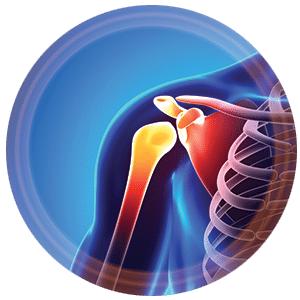
There is a lubricating sac called a bursa between the rotator cuff and the bone on top of your shoulder (acromion). The bursa allows the rotator cuff tendons to glide freely when you move your arm. When the rotator cuff tendons are injured or damaged, this bursa can also become inflamed and painful.
When you raise your arm to shoulder height, the space between the acromion bone and the rotator cuff tendons narrows. The acromion can rub against (or "impinge" on) the tendons and the bursa. This causes irritation and pain. Pain can be the result of the rotator cuff tendons being irritated or damaged, causing tendonitis. It can also result from the bursa becoming inflamed and swollen (bursitis).
What are the causes of bursitis?
- Bone spurs. As we age, bone spurs (bone overgrowth) often develop on the underside of the acromion bone. When we lift our arms, the spurs rub on the rotator cuff tendon. Over time this will weaken the tendon and make it more likely to tear.
- Repetitive movements. Repeating the same shoulder movements, again and again, can damage your rotator cuff muscles and tendons over time. Many physical jobs and routine chores can cause overuse tears. They are also commonly seen in sportspeople.
Bursitis pain (inflammation of the bursa) might be caused by overlying the rotator cuff or tendonitis of the cuff itself. In some circumstances, a partial tear of the rotator cuff may cause impingement pain. Bursitis pain may develop as the result of a minor injury or sometimes, it occurs with no apparent cause.

What are the symptoms of bursitis?
The most common complaint is pain when you lift your arm. There may also be pain when the arm is lowered from an elevated position.
Early symptoms may be mild but often worsen with time. As the problem progresses, the symptoms may include:
- Pain at night
- Decreased range of motion
- Loss of strength
- Difficulty performing activities that place the arm behind the back or above the head
How do you make a diagnosis of bursitis?
After taking a concise and directed medical history, your shoulder will be examined.
During the examination, I will look for:
- Wasting of the muscles
- Swelling and redness
- Pain to touch or palpation
- Range of motion
- Strength or weakness of the muscles
- Signs of previous injuries
Radiological imaging such as X-Rays will give information about the bones and whether there are any bony spurs. Ultrasound and MRI scans look specifically at the rotator cuff tendons.
What are treatment options for bursitis?
Non-operative Treatment
- Rest or activity modification.
- Physiotherapy may improve the strength and movement of your shoulder.
- Simple painkillers, such as anti-inflammatory medications (NSAIDs) or Panadol, may reduce inflammation and pain.
- Cortisone injections in the shoulder can be helpful, but the effect is often temporary.

What Are Surgical Treatments for Bursitis?
If non-operative bursitis treatment in Perth has not been successful, you may need shoulder surgery in Perth. The surgery is known as subacromial decompression or acromioplasty. The aim of surgery is to create more space for the rotator cuff. This is done using arthroscopic (keyhole) surgery in Perth.
The inflamed portion of the bursa is removed as is part of the acromion.
I may also treat other conditions present in the shoulder at the time of surgery including acromioclavicular shoulder joint arthritis, biceps tendonitis, or a partial rotator cuff tear.
Surgery For Shoulder, Hip and Knee
Hip Surgery
Personalised Hip ReplacementConditions For Shoulder, Hip and Knee
Hip Conditions
Hip ArthritisEnquiry
WA Orthopaedic Consulting Rooms
Perth
St John of God
Medical Clinic
Suite 213
25 McCourt Street,
Subiaco WA 6008
Albany
Great Southern
Specialist Centre,
55 Cockburn Rd ,
Mira Mar WA 6330
Phone: 08 9489 8733
Email: blakeney@wcortho.com.au
Fax: 08 9489 8735
Perth Orthopaedic Operating Theatres
St John of God Hospital
12 Salvado Rd, Subiaco WA 6008